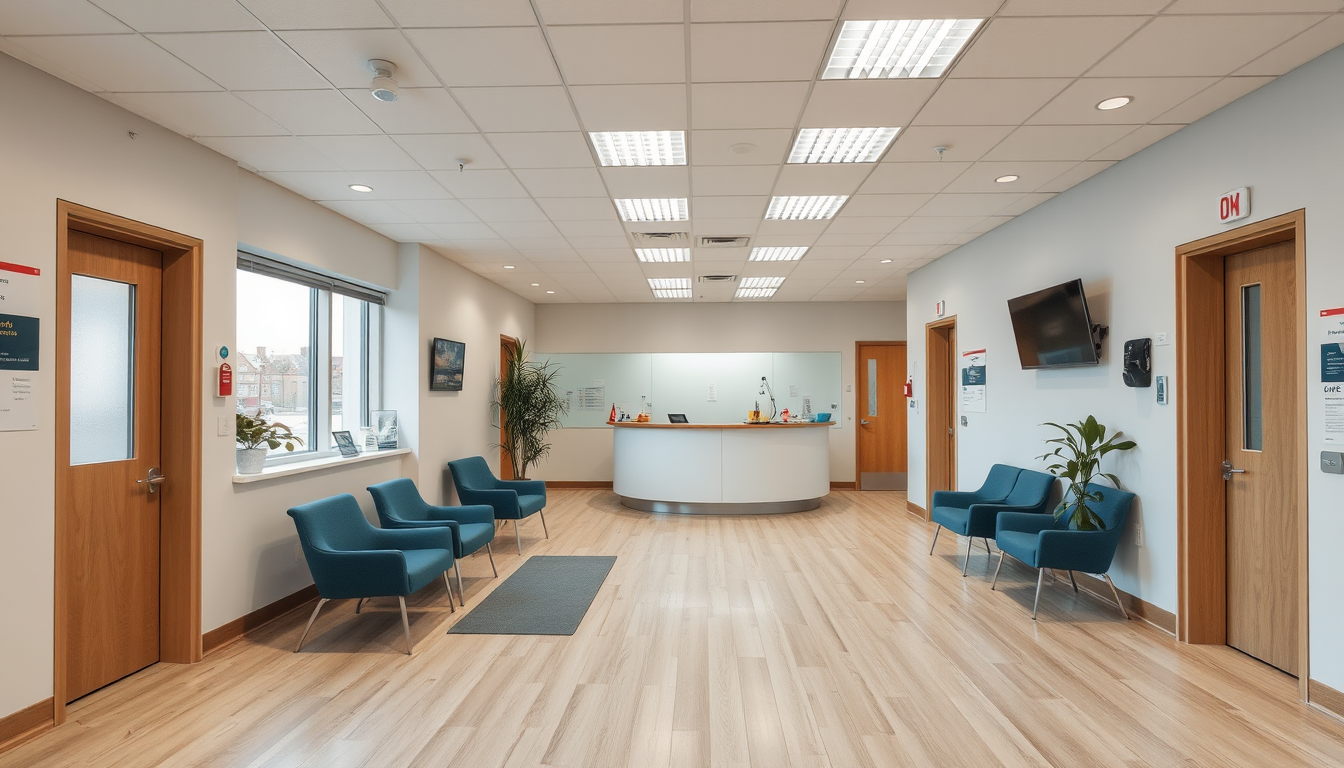
Lockdown procedure for GP surgeries: a practical guide
A lockdown procedure for a GP surgery is a written, rehearsed plan for securing the building when there is a threat nearby. Someone raises the alarm, staff secure doors and move patients away from danger, the police are contacted, and everyone stays put until a named person gives the ALL CLEAR. The plan only works if every member of staff can start it, hear it and act on it within seconds.
Table of contents
- Key takeaways
- What is a lockdown procedure in a GP surgery?
- When should a GP surgery go into lockdown?
- What are the steps in a GP surgery lockdown procedure?
- How do you cover reception, waiting rooms and consulting rooms?
- How do you tell everyone in the building at once?
- Does Martyn's Law apply to GP surgeries?
- How often should a surgery practise lockdown?
- What should a GP surgery lockdown policy include?
- FAQs
- Ready to put a clear lockdown alert in place?
- Suggested JSON-LD
Key takeaways
- A GP surgery lockdown procedure is a written plan that says who raises the alarm, how everyone is told, where patients and staff go, and who gives the ALL CLEAR.
- Lockdown secures a building so that people cannot get in or out while a threat is nearby, which is different from evacuation, where people leave.
- The plan must work for reception, waiting rooms and closed consulting rooms, because staff in separate rooms may not hear a shout or a bell.
- Practising the procedure with clearly labelled drills is the best way to find the gaps before a real incident does.
- Martyn's Law is not yet in force, and whether it applies to a surgery depends on how many people can be present at the premises.
What is a lockdown procedure in a GP surgery?
A lockdown procedure is the set of agreed actions a surgery takes to secure the building and protect patients and staff when a threat is nearby. It covers who decides, how the alarm is raised, what staff do in each room and who calls the all clear.
Lockdown is one of four public protection procedures described in the Martyn's Law framework, alongside evacuation, invacuation and communication. In a lockdown, doors are secured and nobody enters or leaves. In an evacuation, everybody leaves. If you want to be clear on the difference between securing a building and moving people inside it, our guide to invacuation and how it differs from lockdown explains it. Our general lockdown procedure and protocol guide covers the wider principles.
When should a GP surgery go into lockdown?
A surgery should lock down when staying inside with the doors secured is safer than leaving or letting anyone else in. The decision is usually triggered by a threat outside the building, a threat that has entered it, or an instruction from the police.
Typical triggers to write into your plan include:
- A person with a weapon, or a person behaving violently, near the premises.
- A violent or threatening individual in the waiting room or car park.
- A police request to secure the building because of an incident nearby.
- A suspicious item or situation where moving people outside would put them at greater risk.
If you are unsure whether a situation is serious enough, your plan should say that it is better to lock down and stand down than to wait. In any emergency, contact the police.
What are the steps in a GP surgery lockdown procedure?
A good procedure has six steps: decide, alert, secure, shelter, report and release. Each step should have a named role, with a deputy for when that person is away.
| Step | What happens | Who is responsible |
|---|---|---|
| Decide | A named senior person, or any member of staff who sees an immediate threat, decides to start a lockdown. | Practice manager, duty clinician or any staff member |
| Alert | Everyone in the building is told at once that this is a real lockdown, not a drill. | Whoever starts the lockdown |
| Secure | Entrances and internal doors are locked or barricaded as far as the building allows. | Reception and the nearest staff |
| Shelter | Patients and staff move away from doors and windows, stay low and keep quiet. | All staff, guiding patients |
| Report | The police are contacted and given the location, the nature of the threat and the number of people inside. | A named staff member |
| Release | A named person gives the ALL CLEAR, only once the police confirm it is safe. | Practice manager or police instruction |
Keep the wording short enough to say under stress. Staff should know their role without opening a folder.
How do you cover reception, waiting rooms and consulting rooms?
You cover each area by giving it its own short instruction, because the risks and the people in each space are different. A single generic checklist rarely fits a reception desk, a full waiting room and a closed consulting room.
Reception and the waiting room
Reception is often the first to see a threat and the first place patients look for direction. Reception staff need to be able to start the lockdown from their desk without leaving it. The waiting room may hold children, older patients and people with limited mobility, so the plan should say who guides them and where they go.
Consulting and treatment rooms
Clinicians in closed rooms may not hear a shout, a bell or a PA announcement. They also have a patient with them, possibly mid-examination. The plan should say what to do with that patient, whether to lock the door, and that nobody opens it until the ALL CLEAR or the police instruct otherwise.
Staff working alone or at the edges of the building
Think about staff in back offices, dispensaries, storerooms and rooms at the far end of a corridor. Include them in every drill, because they are the people most likely to miss a verbal warning.
How do you tell everyone in the building at once?
You tell everyone at once by using more than one method together, so that no single point of failure leaves part of the building in the dark. A PA, bells, radios and verbal commands should all remain part of the plan.
Lockdown Alert supports the communication part of that plan. It puts a full-screen, audible lockdown message on every PC, Mac, phone, tablet and wall screen at the site within seconds, in your own wording. That matters in a surgery, where almost every consulting room already has a screen on the desk.
Anyone you choose can start a lockdown in whichever way is quickest for them:
- Dialling the lockdown number on any desk phone.
- Pressing a wireless panic button under the reception desk.
- Sending an email to your lockdown address.
- Clicking the red button in the web portal.
You can also see which systems the service connects with on the integrations page. Lockdown Alert tells people what is happening. It does not replace your doors, your staff or your judgement.
For IT leads, Windows PCs can be set up through Microsoft Intune, and our Intune deployment guide explains how. If you have questions before you start, the support page is the place to begin.
Does Martyn's Law apply to GP surgeries?
It depends on the premises, and in particular on how many people can be present at the same time. Martyn's Law is the Terrorism (Protection of Premises) Act 2025, and it is not yet in force.
The Act received Royal Assent on 3 April 2025, with an implementation period of at least 24 months. The Security Industry Authority is the regulator and has said it expects the duties to start in spring 2027, but no date is confirmed. Premises where 200 to 799 people can be present fall into the standard tier, and 800 or more into the enhanced tier.
The standard tier asks for public protection procedures: evacuation, invacuation, lockdown and communicating with people on site. The Act does not require any particular product or equipment. Our Martyn's Law explainer sets out the detail, and the Home Office statutory guidance is the source to check for your own premises. Even if your surgery falls below the thresholds, a written lockdown plan is sensible preparation. The National Protective Security Authority publishes free protective security advice.
How often should a surgery practise lockdown?
A surgery should practise lockdown often enough that every member of staff, including locums and new starters, has taken part in at least one drill. Your own risk assessment should set the schedule, as there is no single figure that suits every practice.
Run drills at different times of day, including busy clinic sessions and quieter periods, so you learn how the plan holds up with different numbers of people. Afterwards, ask what staff heard, what they saw and where they were unsure.
Lockdown Alert drills always look like drills. They show in amber with a TEST badge, so nobody mistakes one for the real thing, and an ALL CLEAR stands every screen down. The portal records who started each alert or drill, when, how many screens showed it and when it cleared. That gives you a record to share with partners, governors or inspectors, depending on how your practice is run.
What should a GP surgery lockdown policy include?
A lockdown policy should include the triggers, the roles, the alert method, the actions for each area, the all clear process and the review schedule. It should fit on a few pages and be easy to find.
| Policy section | What to write down |
|---|---|
| Triggers | The situations in which any member of staff can start a lockdown without asking permission first. |
| Roles | A named decision-maker, a named person who contacts the police and a deputy for each when they are absent. |
| Alert method | Every way staff can raise the alarm, such as desk phone, panic button, email or portal, and how everyone is told. |
| Area actions | Short, separate instructions for reception, the waiting room, consulting rooms and back offices. |
| Vulnerable people | How children, people with mobility needs and anyone who cannot stay quiet will be helped. |
| All clear | Who can give the ALL CLEAR and how the message reaches every room. |
| Drills and review | How often you practise, who records the outcome and when the policy is next reviewed. |
FAQs
Is a GP surgery lockdown the same as an invacuation?
No. A lockdown secures the building so people cannot get in or out, while an invacuation moves people to a safer area inside the building. Your plan may use both, depending on where the threat is.
Who should be able to start a lockdown in a surgery?
Any member of staff who sees an immediate threat should be able to start one, without waiting for permission. Reception staff are often best placed to see danger first, so give them a quick way to raise the alarm from their desk.
What should staff do with a patient in a consulting room?
Staff should keep the patient in the room, lock or secure the door if they can, move away from the door and windows, and stay quiet. Nobody should open the door until the ALL CLEAR is given or the police instruct otherwise.
Does a lockdown alert replace a PA, bells or verbal commands?
No. A screen alert works alongside them. Each method reaches people differently, so a surgery plan is stronger when it uses several together.
How much does Lockdown Alert cost for a surgery?
Lockdown Alert starts from £350 per site per year, with data hosted in the UK. There is a 30-day free trial with no card needed, so you can test it in your own building first.
Ready to put a clear lockdown alert in place?
A written plan is the foundation, and a reliable way to tell every room at once is what makes it usable. Try Lockdown Alert free for 30 days, with no card needed, and see how an alert looks on every screen in your surgery before you decide.
Start your free 30-day Lockdown Alert trial
This article is general information, not legal advice. Check the Home Office statutory guidance and the Security Industry Authority for the current position on Martyn's Law.