
Lockdown procedure and protocol: a practical guide
What a lockdown is, when to use one, the steps in a good lockdown protocol, what to put in your lockdown policy and how to practise it. Written for UK schools, trusts and workplaces.
Correct at 11 October 2026. We review this page against the official sources regularly and update it when something changes.
What a lockdown is
A lockdown secures a building, or part of it, so that people cannot get in or out while there is a threat nearby. The Home Office's statutory guidance for Martyn's Law describes it as securing premises to prevent people entering or leaving, for example by locking doors, closing shutters or using barriers. It is one of four public protection procedures in the Act, alongside evacuation, invacuation and communication.
Schools and workplaces lock down for many reasons, not only terrorism: an intruder on site, a violent visitor at reception, a dangerous animal, police activity in the street, or a public disorder incident nearby. A good lockdown procedure works for all of them.
Lockdown, invacuation or evacuation?
| Procedure | What it means | Typical trigger |
|---|---|---|
| Lockdown | Secure the building or a zone so nobody can get in or out. | An intruder or threat on site or right outside. |
| Invacuation | Bring people inside, or move them to a safer place within the building. | A threat outside, such as an incident in the street or a hazard in the air. |
| Evacuation | Get people out of the building, usually by dispersing rather than gathering in one place. | A threat inside that people can safely move away from, or a fire. |
The three often run together: pupils are invacuated from the playground, then the building locks down. That is why the guidance asks for lockdown instructions that sound different from evacuation instructions (statutory guidance, 7.49). Staff must know at once which one is happening, because the right action for one is the wrong action for the other.
Full, partial and dynamic lockdown
- Full lockdown: the whole site is secured and nobody moves until the all clear.
- Partial lockdown: the outside doors are secured, but people can carry on inside. Useful when the threat is outside and some way off.
- Dynamic lockdown: the ability to quickly restrict access to and exit from a site, or part of it, through physical measures such as locked doors, in response to a fast-moving threat. ProtectUK uses this term, and the point is speed: decide, alert, lock.
Locking down at the wrong moment can leave people stuck outside, so the plan should say who decides, and on what information. Each case is judged on what is known at the time.
The steps in a lockdown protocol
- Raise the alert. Anyone who sees the threat must be able to start the alert quickly, from wherever they are. The DfE says the first alert should be quick to activate, reach everyone on site, and be something any member of staff could start from various locations.
- Call the police on the emergency number once it is safe to do so, with what you know: where, who, what you saw.
- Secure the entry points. Lock outside doors, close shutters and gates, and stop anyone coming in.
- Get people into safe rooms. Bring people in from outside, into rooms that can be secured. Lock or block the doors, close blinds, turn off lights and keep away from doors and windows.
- Keep quiet and stay put. Phones on silent. Do not open the door to anyone until the all clear is confirmed.
- Account for people. Take a register in each room and share it, so the people in charge know who is missing.
- Stand down properly. The all clear should come in a way people trust, from the person in charge or the police, never just a knock on the door.
- Debrief and record. What happened, what worked and what did not, and what changes in the plan.
How people find out
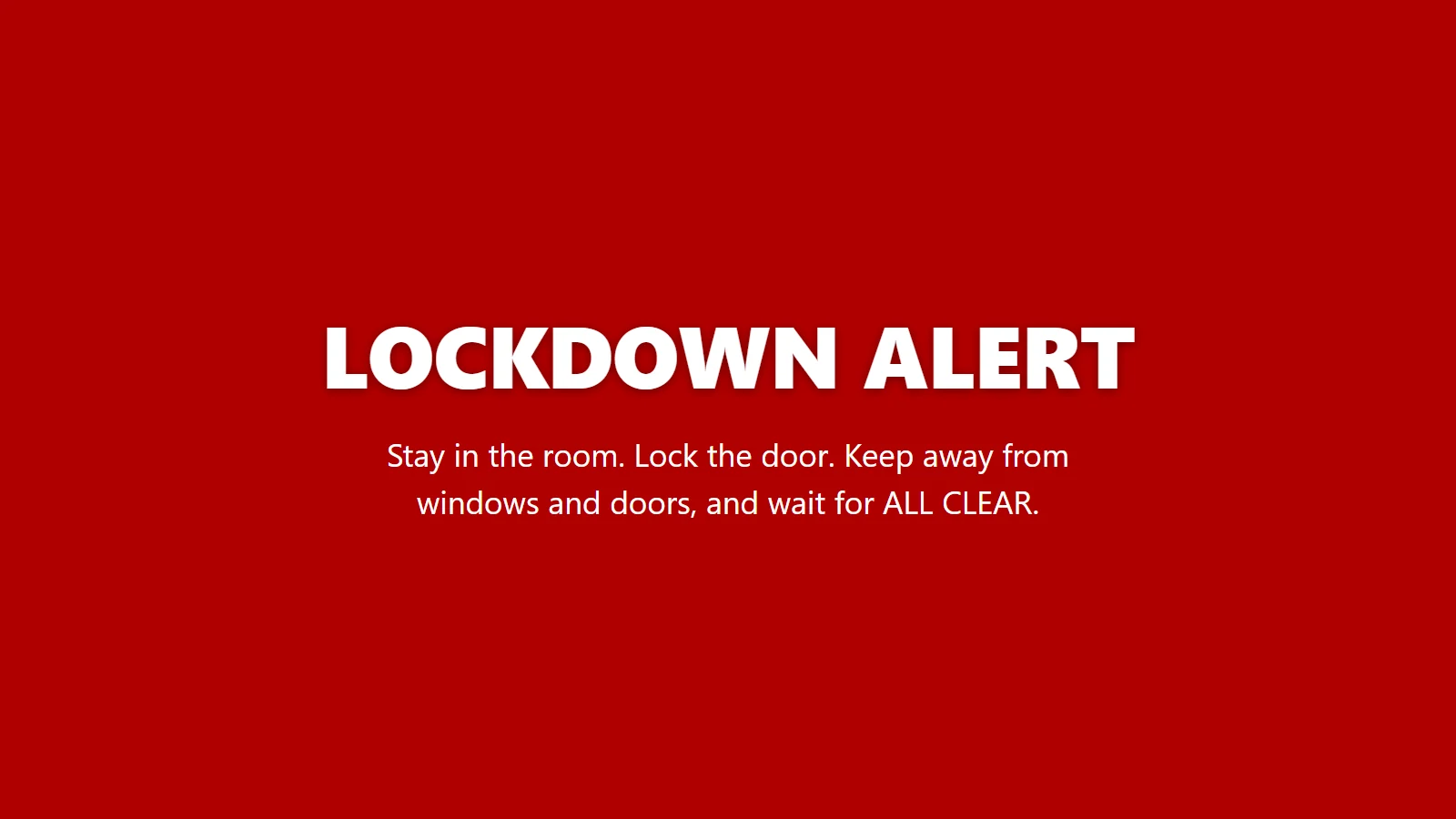
Most lockdowns go wrong in the first minute: the people who need to act do not know it has started. A bell can be confused with the fire alarm, a PA announcement does not reach every room, and a message in a staff group chat only works if people are looking at their phones. The statutory guidance asks whether information will reach people effectively in every area of the premises (7.48).
Use more than one channel. A distinct tone or PA message, plus an alert on every computer and screen, plus a message to staff phones, covers the classrooms, offices and IT suites where one channel alone misses people. How a lockdown alarm for schools works.
What to put in a lockdown policy
Your lockdown policy is the written version of the protocol. For schools it usually sits alongside the critical incident and emergency plan. A useful policy covers:
- who can start a lockdown, and how (every way it can be started, and a backup if one is unavailable);
- the signal or message for lockdown, and how it differs from evacuation and invacuation;
- who calls the police, and who takes charge on site;
- which doors, gates and shutters are secured, and by whom;
- the safe rooms, and what to do in rooms that cannot be locked, open spaces, the hall, the canteen and outside areas;
- pupils or visitors who need help, including those with special educational needs or a disability, and children in early years settings;
- how registers are taken and shared during a lockdown;
- how the all clear is given, and how parents, carers or relatives are told;
- how often the procedure is practised, and how drills are recorded and reviewed.
A nursery lockdown policy covers the same ground with more on the very young: keeping children calm, how staff keep ratios in a safe room, and how cots and buggies are handled.
Lockdown drills and practice
The statutory guidance says procedures should be tested and practised so they are fit for purpose, and reviewed periodically. The DfE asks schools to test their plans regularly and to review and record what went well. Many schools practise once a term.
- Tell parents and carers before the first drill, and explain it calmly to pupils. With young children, a game of being quiet as mice works better than talk of danger.
- Make drills look different from the real thing, so a practice never causes panic and a real alert is never mistaken for practice.
- Vary the time: break time, lunchtime and changeovers show up the gaps.
- Time how long it takes for every room to know, and for doors to be secured.
- Record each drill: when, who started it, how it was started, how long it took and what to change.
Where Lockdown Alert fits
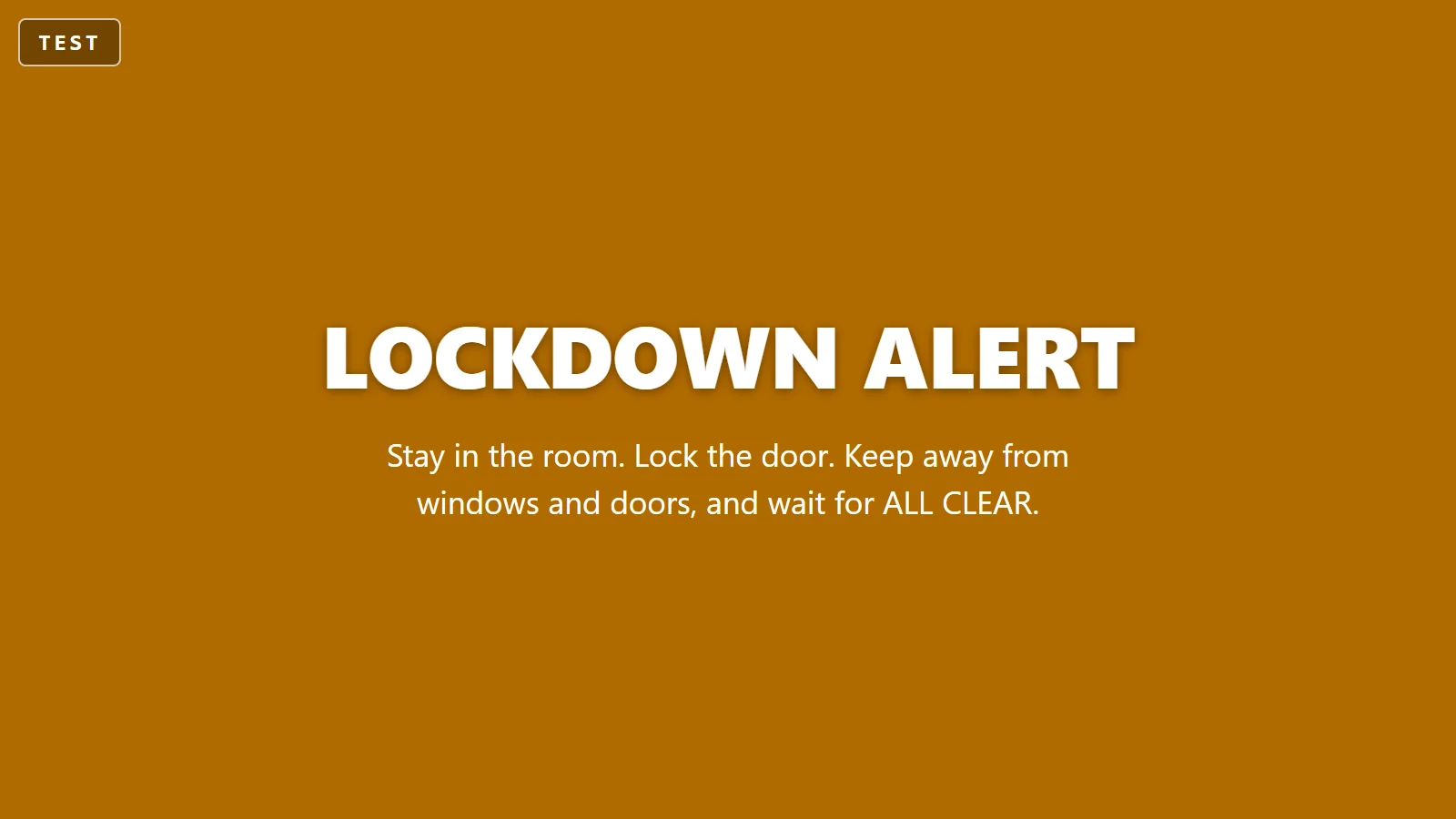
Lockdown Alert is the alert part of your protocol. A phone call, a panic button, an email or a tap in the portal puts your lockdown message on every PC and screen at the site within seconds, even locked PCs and screens that have gone to sleep. Drills are amber with a TEST badge, and the portal keeps a history of who started each alert, when, how many screens showed it and when it was cleared. It does not lock doors, and it works alongside your PA, not instead of it.
Questions people ask
What is a lockdown procedure?
A lockdown procedure is the plan a school or workplace follows to secure its building, or part of it, so nobody can get in or out while there is a threat. It says who starts it, how everyone is told, which doors are secured, where people go, how the police are called and how the all clear is given.
What is the difference between a lockdown and an evacuation?
A lockdown keeps people inside and secures the building against a threat. An evacuation moves people out of the building. They are opposite actions, so the signal for each must be different and staff must know at once which one is happening.
What is a dynamic lockdown?
Dynamic lockdown is the ability to quickly restrict access to and exit from a site or building, or part of it, through physical measures such as locked doors, in response to a threat. The emphasis is on speed: the decision, the alert and the locking happen in the first minutes.
How often should schools practise lockdown?
The DfE asks schools to test their plans regularly and to record what went well and what to improve. There is no single legal frequency; many schools practise once a term, varying the time of day so that break times and changeovers are tested too.
What should a school lockdown policy include?
Who can start a lockdown and how, the signal and how it differs from evacuation, who calls the police and takes charge, which doors are secured, where people shelter, how pupils with additional needs are supported, how registers are taken, how the all clear is given and parents are told, and how drills are practised and recorded.
Does Martyn's Law require a lockdown procedure?
For premises in scope, yes. Premises where 200 or more people can be expected must have appropriate public protection procedures, so far as is reasonably practicable, and lockdown is one of the four named in the Act. Schools of that size are always standard tier. The duties are expected from spring 2027.
Sources
- Terrorism (Protection of Premises) Act 2025: statutory guidance (Home Office)
- Ensure that lockdown procedures are known, tried and tested (ProtectUK)
- Evacuation, invacuation, lockdown, protected spaces (ProtectUK)
- Protective security and preparedness for education settings (DfE, PDF)
- Terrorism (Protection of Premises) Act 2025 (legislation.gov.uk)
This page is general information, not legal or security advice. Your own risk assessment and local police advice come first.
See it on your own screens
Start a 30-day trial and run your first drill today.