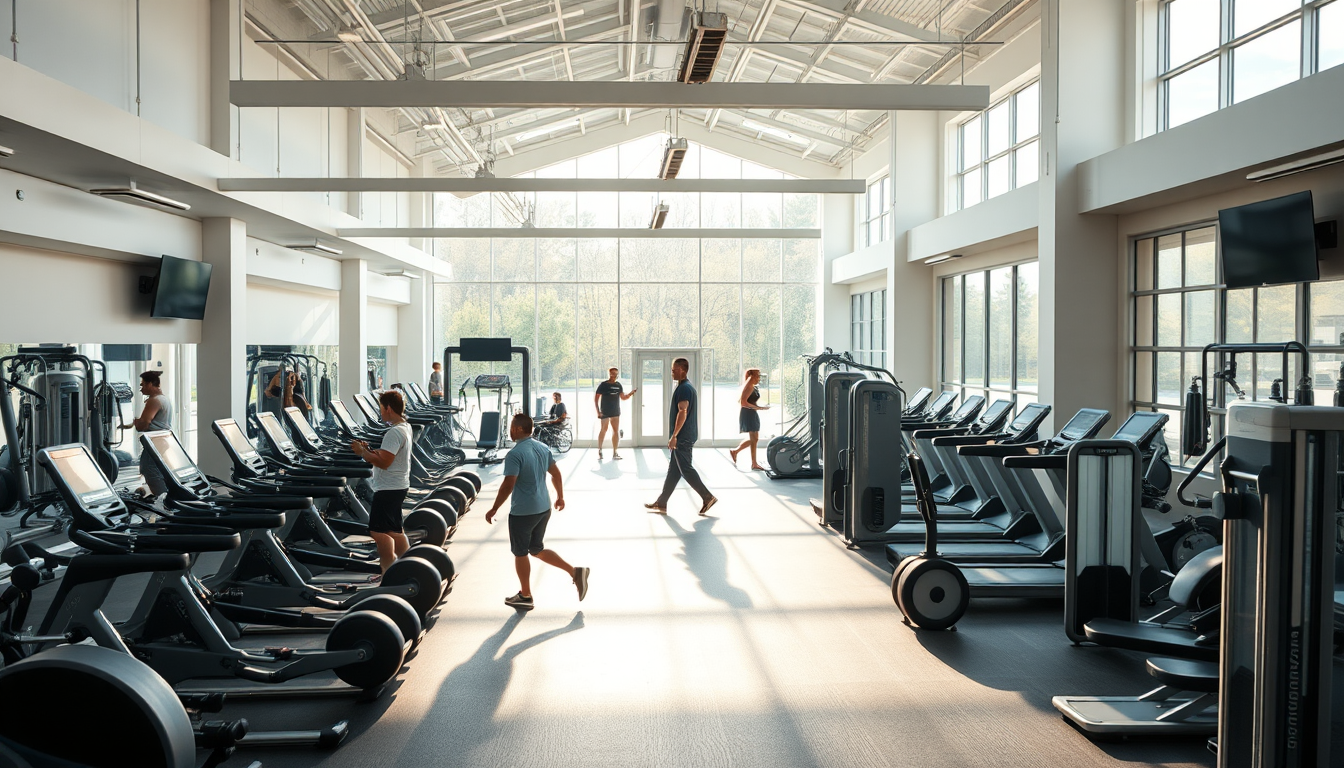
Martyn's Law for gyms and leisure centres: what it means and how to prepare
Martyn's Law is the Terrorism (Protection of Premises) Act 2025, and it applies to gyms and leisure centres according to how many people can be present at once. Premises where 200 to 799 people can be present are standard tier, and those with 800 or more are enhanced tier. The standard tier asks for public protection procedures: evacuation, invacuation, lockdown, and communicating with people on site.
The duties have not started yet, and no start date is confirmed. Gym and leisure centre managers can use the time to plan and practise now.
Table of contents
- Does Martyn's Law apply to gyms and leisure centres?
- Which tier is a gym or leisure centre in?
- What procedures does a leisure centre need to prepare?
- Why are gyms and leisure centres harder to plan for?
- When does Martyn's Law start?
- How can a lockdown alert help a gym or leisure centre?
- What should a gym or leisure centre do now?
- FAQs
- Prepare your site and practise before the duties start
Key takeaways
- Martyn's Law is the Terrorism (Protection of Premises) Act 2025, and it received Royal Assent on 3 April 2025.
- A gym or leisure centre where 200 to 799 people can be present is standard tier, and one with 800 or more is enhanced tier.
- The standard tier asks for four public protection procedures: evacuation, invacuation, lockdown, and communicating with people on site.
- The Security Industry Authority (SIA) has said it expects the duties to start in spring 2027, but no date is confirmed.
- The Act does not require any particular product or equipment, so your plan should still include your PA, radios and verbal commands.
Does Martyn's Law apply to gyms and leisure centres?
A gym or leisure centre falls within Martyn's Law tiers when 200 or more people can be present at the same time. The Act is built around capacity rather than the type of business, so a large leisure centre with pools, courts and studios is more likely to reach the threshold than a small studio.
The Act is named after Martyn Hett, one of the 22 people killed in the Manchester Arena attack in May 2017. It follows years of campaigning by his mother, Figen Murray. Wikipedia's article on Martyn's Law gives the background and timeline.
For a plain-English explanation of the Act aimed at schools and other premises, see our guide to Martyn's Law and what compliance means.
Which tier is a gym or leisure centre in?
Your tier depends on the number of people who can be present at your premises, and the two tiers start at 200 and 800. The table below sets out each tier on its own terms.
| Number of people who can be present | Tier | What it means for a gym or leisure centre |
|---|---|---|
| 200 to 799 | Standard tier | Public protection procedures: evacuation, invacuation, lockdown, and communicating with people on site |
| 800 or more | Enhanced tier | A higher tier under the Act, so read the Home Office statutory guidance for the additional duties |
Think about the whole site when you work out a number. A leisure centre may hold members in the gym, swimmers in the pool, children in classes and visitors in a café at the same time. Check the Home Office statutory guidance for how capacity should be counted at your premises, and speak to the SIA if you are unsure.
What procedures does a leisure centre need to prepare?
At standard tier, a leisure centre is asked to have four public protection procedures: evacuation, invacuation, lockdown, and communicating with people on site. The Act does not require any particular product or equipment to do this.
Here is what each procedure means in practice:
- Evacuation: moving people out of the building to a safe place.
- Invacuation: moving people to a safe place inside the building. Our page on what invacuate means explains it in more detail.
- Lockdown: securing premises to stop people entering or leaving, for example by locking doors, closing shutters or using barriers. This is how the Home Office statutory guidance describes it.
- Communication: telling staff, members and visitors what is happening and what to do.
Our practical guide to lockdown procedure and protocol covers when to use a lockdown and what to put in a policy.
Why are gyms and leisure centres harder to plan for?
Leisure sites are harder to plan for because people are spread across many separate spaces and are often not near a desk, a phone or a staff member. Getting one clear message to everyone is the main challenge.
These are the features that tend to cause problems:
- Many zones: gym floors, studios, pools, courts, changing rooms, soft play and cafés each need their own response.
- Changing populations: the number of people on site can change quickly across the day, and many of them are visitors who do not know the building.
- Noise and headphones: music, pool acoustics and earbuds can make a verbal instruction easy to miss.
- Small staff teams: a few people on duty may need to cover a large footprint.
- Mixed ages: classes, swimming lessons and children's activities add people who depend on staff for direction.
A written plan for each zone, backed by regular drills, is the sensible response to all of these.
When does Martyn's Law start?
No start date is confirmed. The Act received Royal Assent on 3 April 2025 with an implementation period of at least 24 months, and according to the Security Industry Authority, the regulator, it expects the duties to start in spring 2027.
Until the date is announced, treat spring 2027 as a planning assumption rather than a deadline. Watch for updates from the Home Office and the SIA, because guidance can change.
How can a lockdown alert help a gym or leisure centre?
A lockdown alert supports the communication part of your procedures by putting a clear message on every screen on site within seconds. It does not replace your PA, radios or staff commands, and it does not make a site meet the law. It works alongside them.
Lockdown Alert shows your own lockdown message full screen, with sound, on every PC, Mac, phone, tablet and wall screen at the site. The message stays up until ALL CLEAR is sent or the auto-close time is reached. For screens that are not part of a managed PC fleet, the wall display opens in any web browser.
Staff can start an alert in whichever way is quickest for them:
| Where the person is | How they can start a lockdown |
|---|---|
| At reception or a staff desk | Dial the lockdown number on any desk phone |
| At the front desk or a pool office | Press a wireless panic button fixed under the desk |
| Away from a phone | Send an email to the site's lockdown address |
| At a computer | Tap the red button in the web portal |
| At a door | Press a button on the door intercom |
| In a monitored area | Let a CCTV alarm rule start the alert |
Starting from a phone call means the system works with the phone system you already have. You can read about the panic button system and buy wireless panic buttons on our site. The integrations page lists the other ways to start an alert.
What about people in the pool or changing rooms?
Someone in a pool or changing area may never see a screen, so a screen alert cannot be your only method. Keep your PA, radios and verbal commands in the plan, and use the screen alert to make sure staff and visitors in areas with screens are told at the same moment. This is why we describe Lockdown Alert as working alongside your other systems.
Can you practise without causing alarm?
Yes. Drills always look like drills: they appear in amber with a TEST badge, so nobody mistakes one for a real event. When the drill ends, ALL CLEAR stands every screen down.
The portal also keeps a record of who started each alert or drill, when, how many screens showed it and when it cleared. That gives you something concrete to show managers, governors or inspectors.
Which devices can show the alert?
Windows PCs and Macs can run the app. Phones, tablets and TVs can open the wall display in a browser. If your Windows PCs are managed with Microsoft Intune, our Intune page explains the approach. If you have questions about your own setup, our support page is the place to start.
How much does it cost?
Lockdown Alert costs from £350 per site per year, with data hosted in the UK. There is a 30-day free trial and no card is needed to start it. Your own price will depend on your site, so check the pricing section on our website.
What should a gym or leisure centre do now?
Start by working out how many people can be present at your site, then write down what staff would do for each of the four procedures. Practise them before the duties start, and review the plan after every drill.
A simple checklist:
- Work out your capacity. Use the Home Office statutory guidance to decide whether you are standard or enhanced tier.
- Name a responsible person. Decide who leads on planning and who can make the call in each shift.
- Write a short procedure for each zone. Cover the gym floor, studios, pool, changing rooms, reception and any children's areas.
- Decide how you will tell people. List every channel you will use: PA, radios, verbal commands, screens and signs.
- Run a drill and record it. Note what worked, what did not and who was unsure.
- Brief new and part-time staff. Teams that work irregular shifts need the same clarity as full-time colleagues.
- Review regularly. Revisit the plan when your layout, opening hours or capacity change.
If an incident is happening or someone is in danger, contact the police.
FAQs
Does Martyn's Law apply to my gym?
It depends on how many people can be present at your premises at the same time. Premises where 200 to 799 people can be present are standard tier, and 800 or more are enhanced tier. If you are unsure of your number, check the Home Office statutory guidance or contact the SIA.
Do small gyms need to do anything?
The tiers in the Act start at 200 people, so capacity is the first thing to check. For smaller premises, read the Home Office statutory guidance for the current position. Even where no duty applies, a simple plan for lockdown and communication is good practice.
Do leisure centres need a lockdown alert system?
No. The Act does not require any particular product or equipment. A lockdown alert can support the communication part of your procedures, but your plan should also include your PA, radios and verbal commands.
When will Martyn's Law start for leisure centres?
No date is confirmed. The Act received Royal Assent on 3 April 2025 with an implementation period of at least 24 months, and the SIA has said it expects the duties to start in spring 2027.
What is the difference between lockdown and invacuation?
A lockdown secures premises so people cannot enter or leave, for example by locking doors or closing shutters. Invacuation moves people to a safe place inside the building. Both are among the four public protection procedures in the Act, alongside evacuation and communication.
How much does Lockdown Alert cost?
Lockdown Alert costs from £350 per site per year, with UK-hosted data. There is a 30-day free trial and no card is needed to start it.
Prepare your site and practise before the duties start
You do not need to wait for a confirmed date to get your procedures clear. Start with a written plan, run a drill and check that everyone on shift knows how to raise the alarm. If you want to see how a full-screen lockdown message and a clear record of every drill fit into that plan, you can try Lockdown Alert free for 30 days with no card.
Start your free 30-day trial of Lockdown Alert
This article is general information, not legal advice. Check the Home Office statutory guidance and the Security Industry Authority for the current position on Martyn's Law.